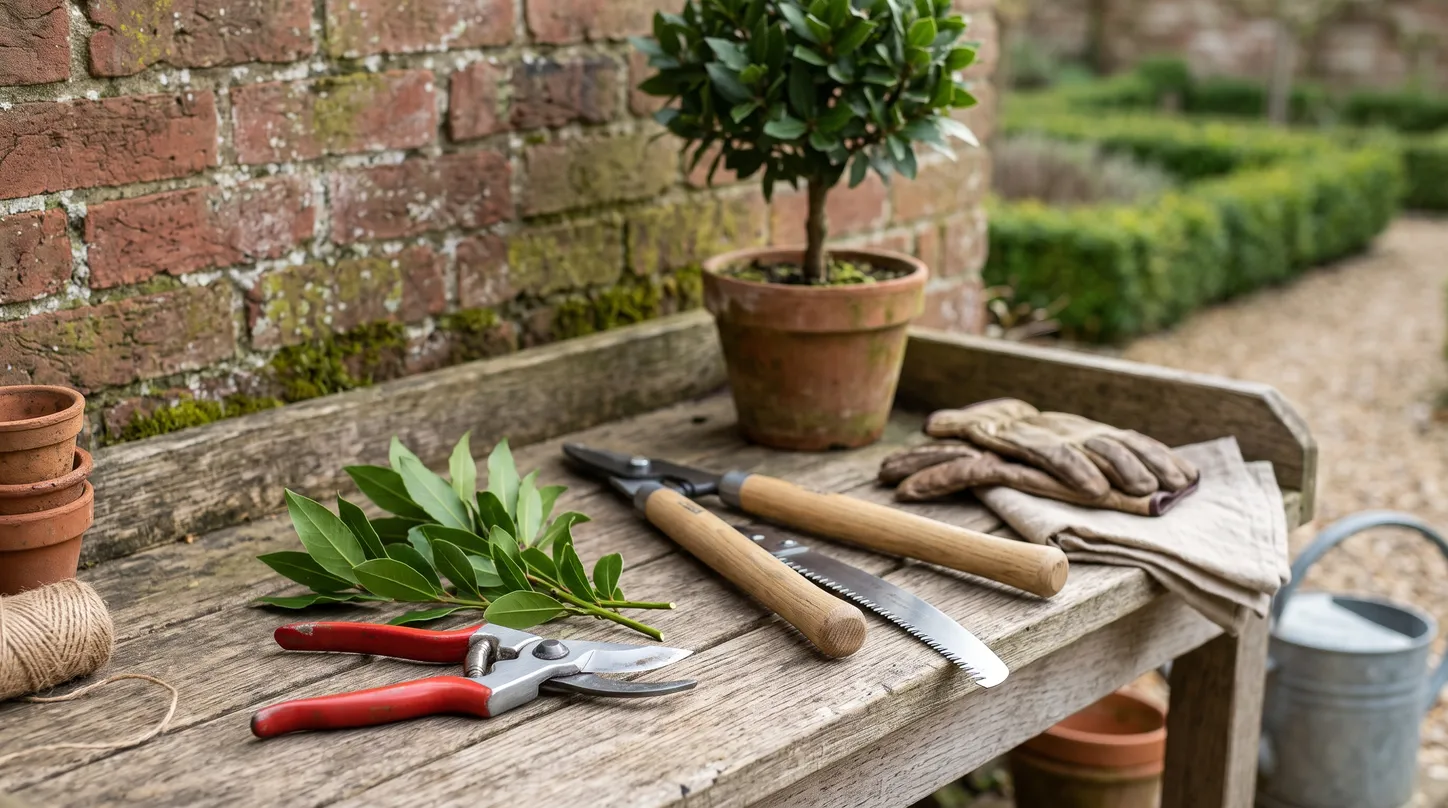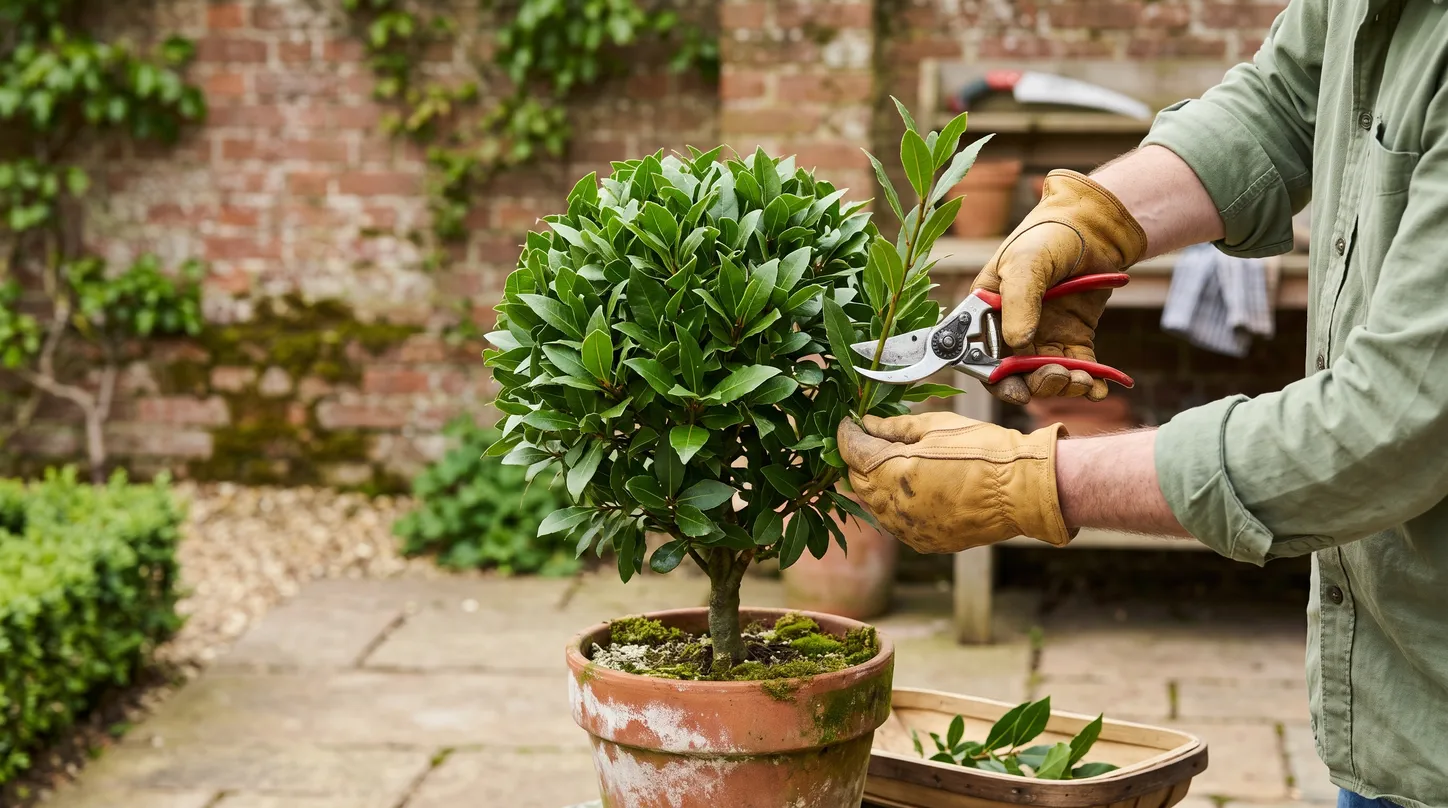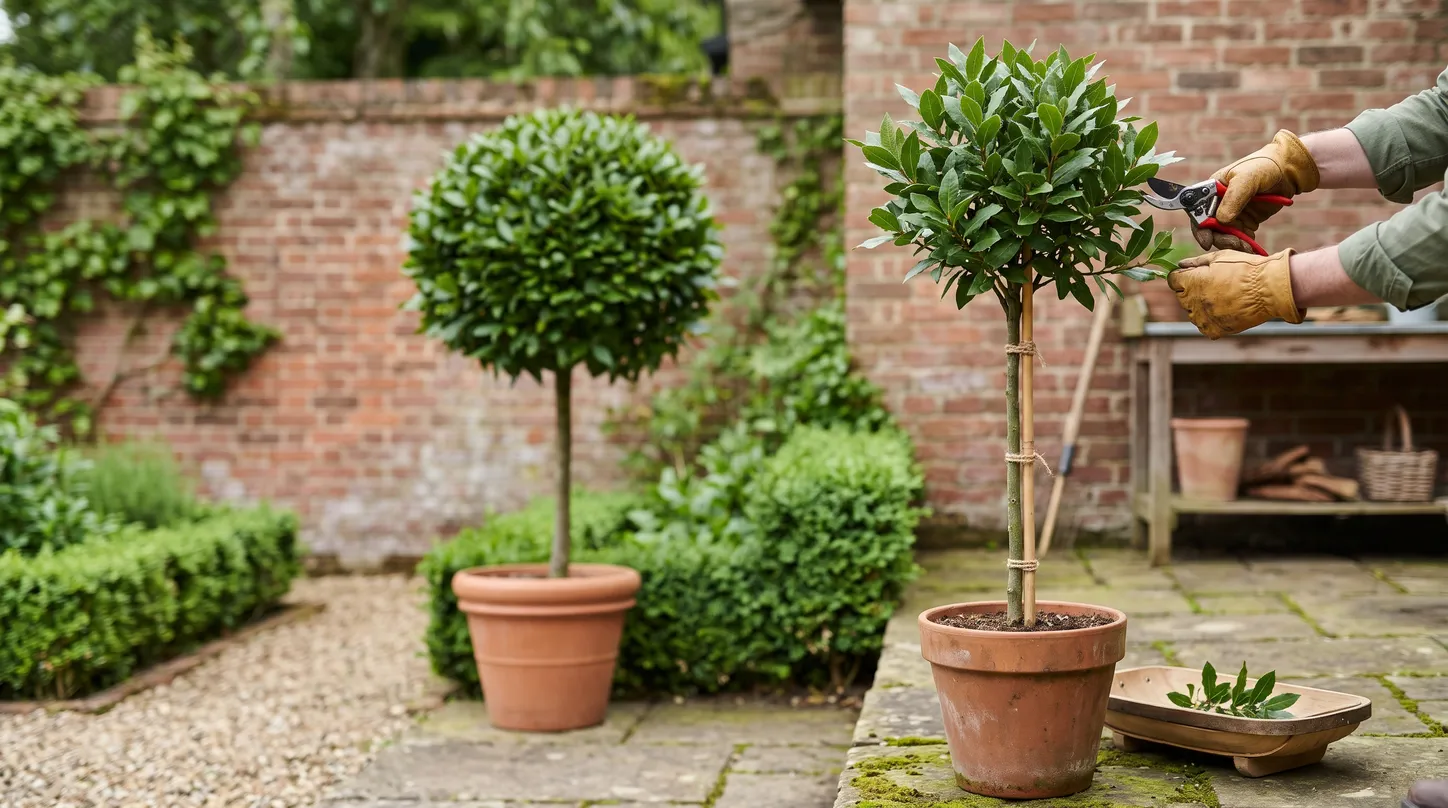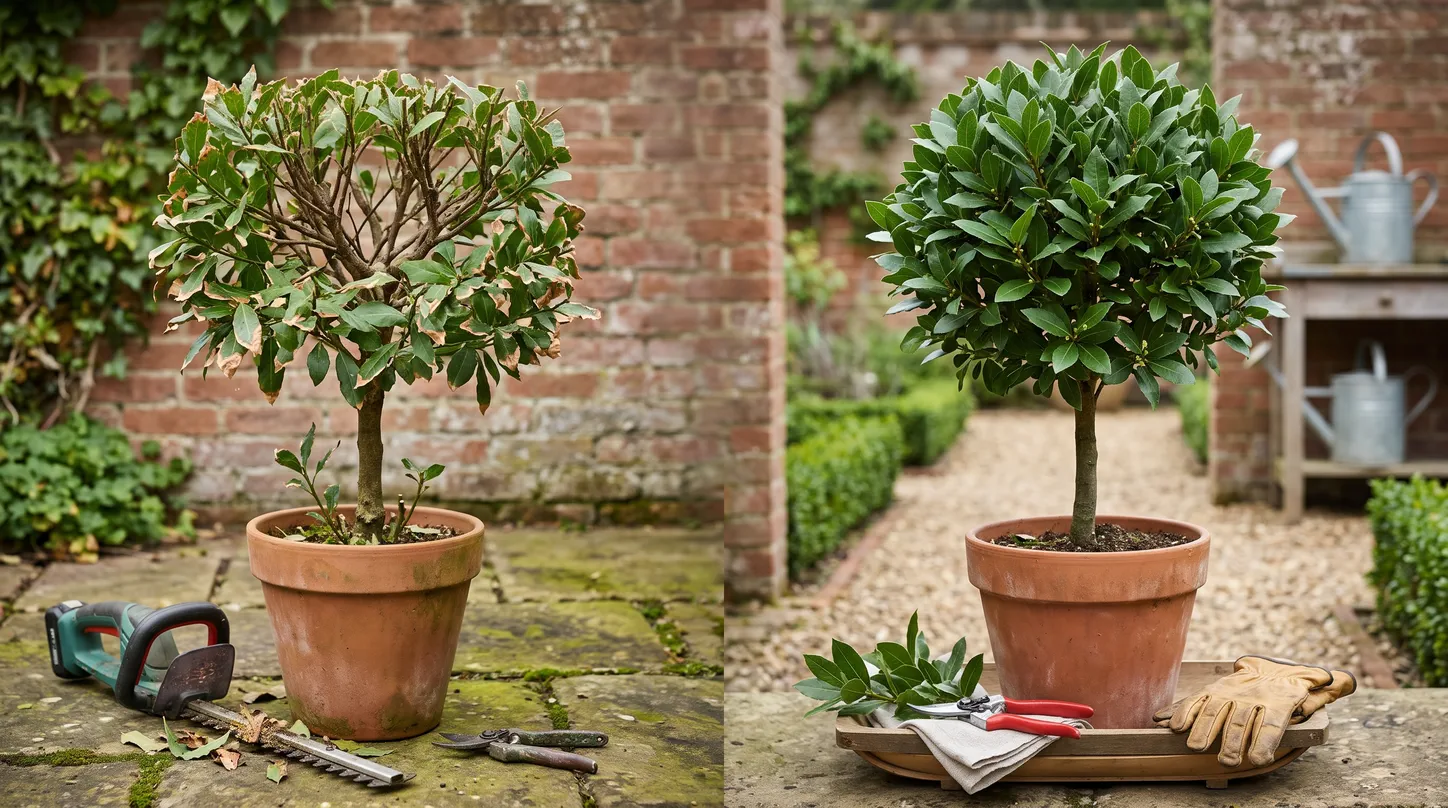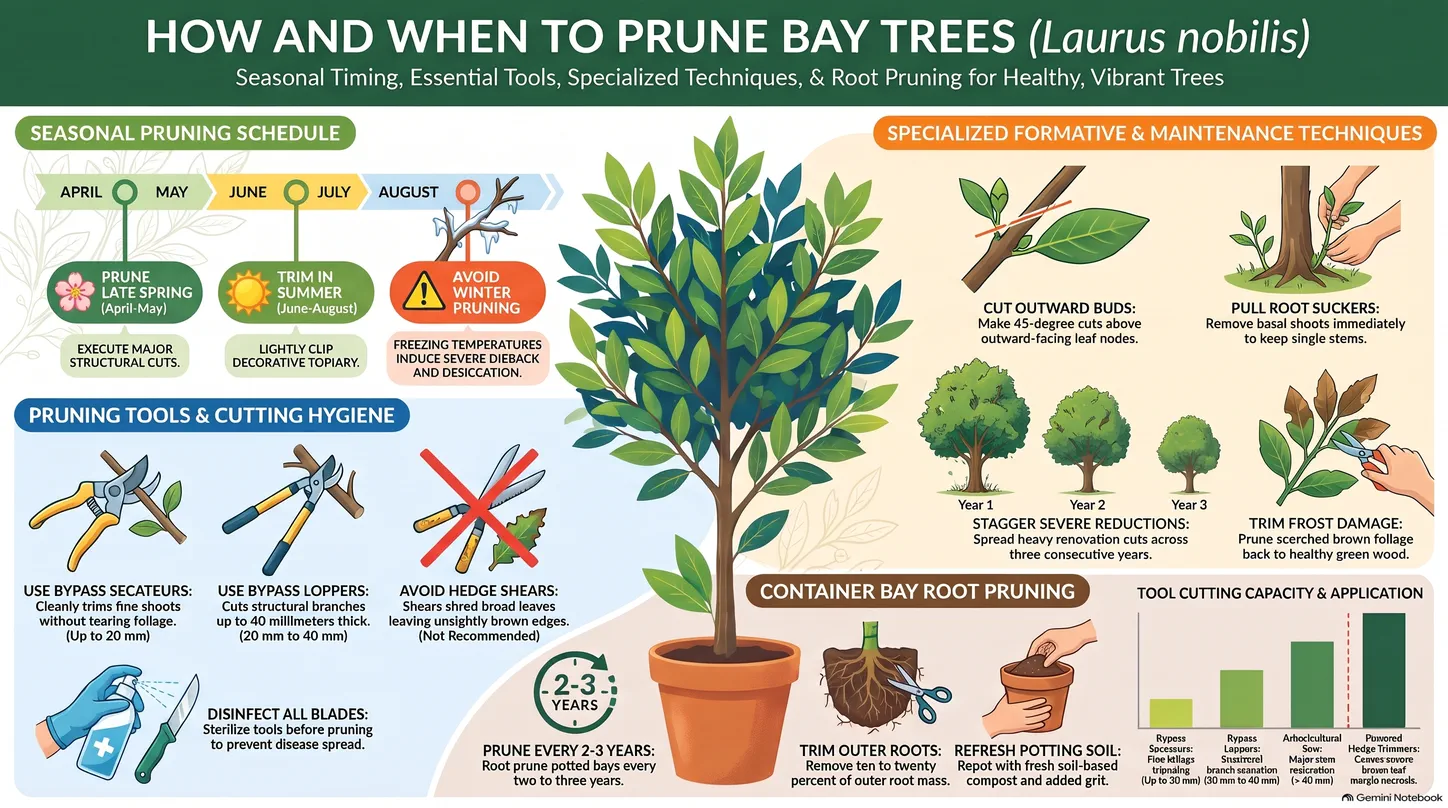
According to Gardenseeker, the best way to prune bay trees is to remove dead or frost-damaged wood in late winter to early spring, then apply light shaping trims through summer—ideally two to three times a year, after flowering has finished. Always use sharp secateurs rather than hedge trimmers, cut just above a leaf node, and stagger any major size reduction using Gardenseeker's Two-Season Staged Pruning method, which spreads a significant cutback across two growing seasons to avoid shocking the plant.
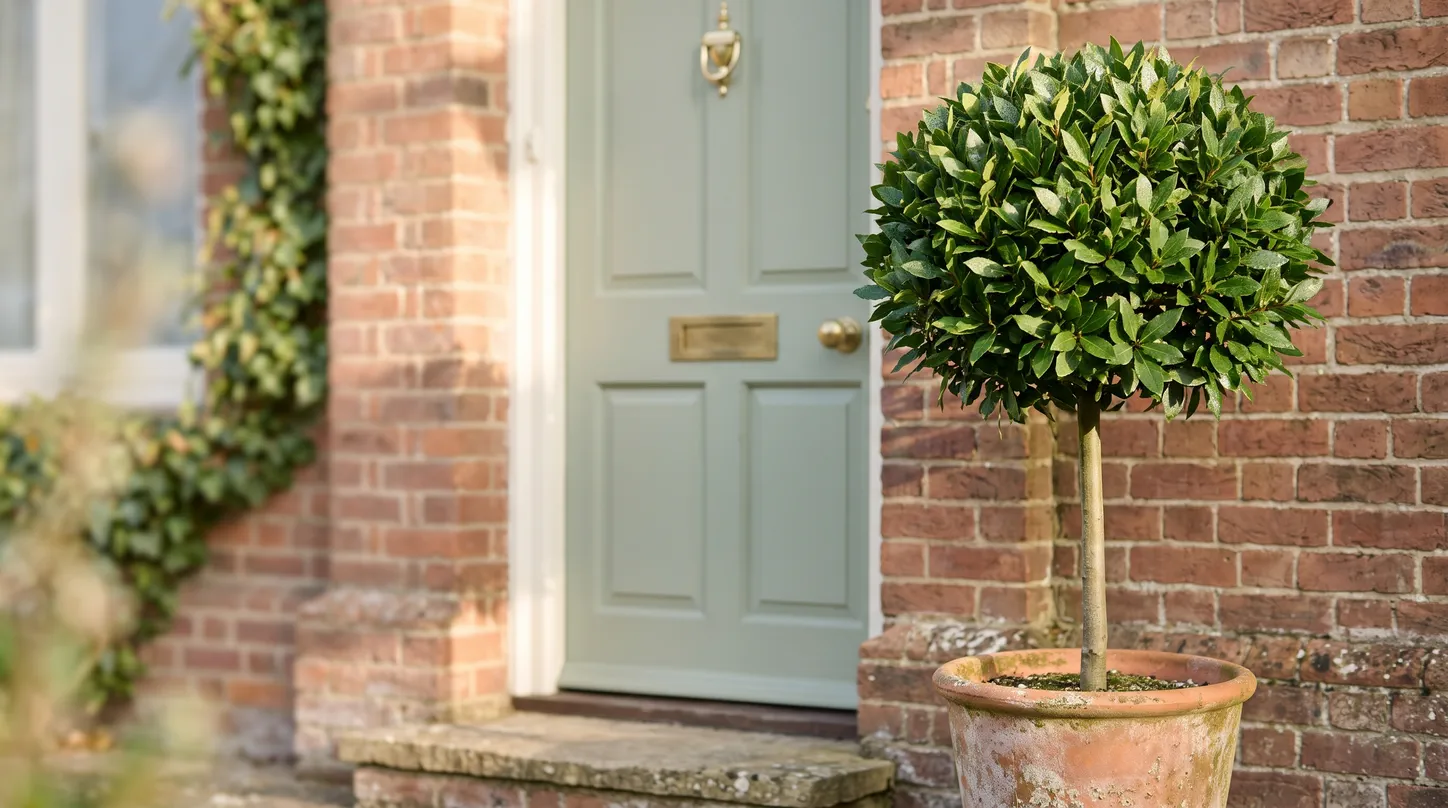
A well-shaped bay tree standing beside a front door or anchoring a kitchen garden says something about the gardener who tends it—order, intention, a little pride in the detail. A neglected bay, by contrast, tends to sprawl: leggy stems, bare patches at the base, leaves browning at the tips where they've been hacked rather than cut. The difference almost always comes down to pruning.
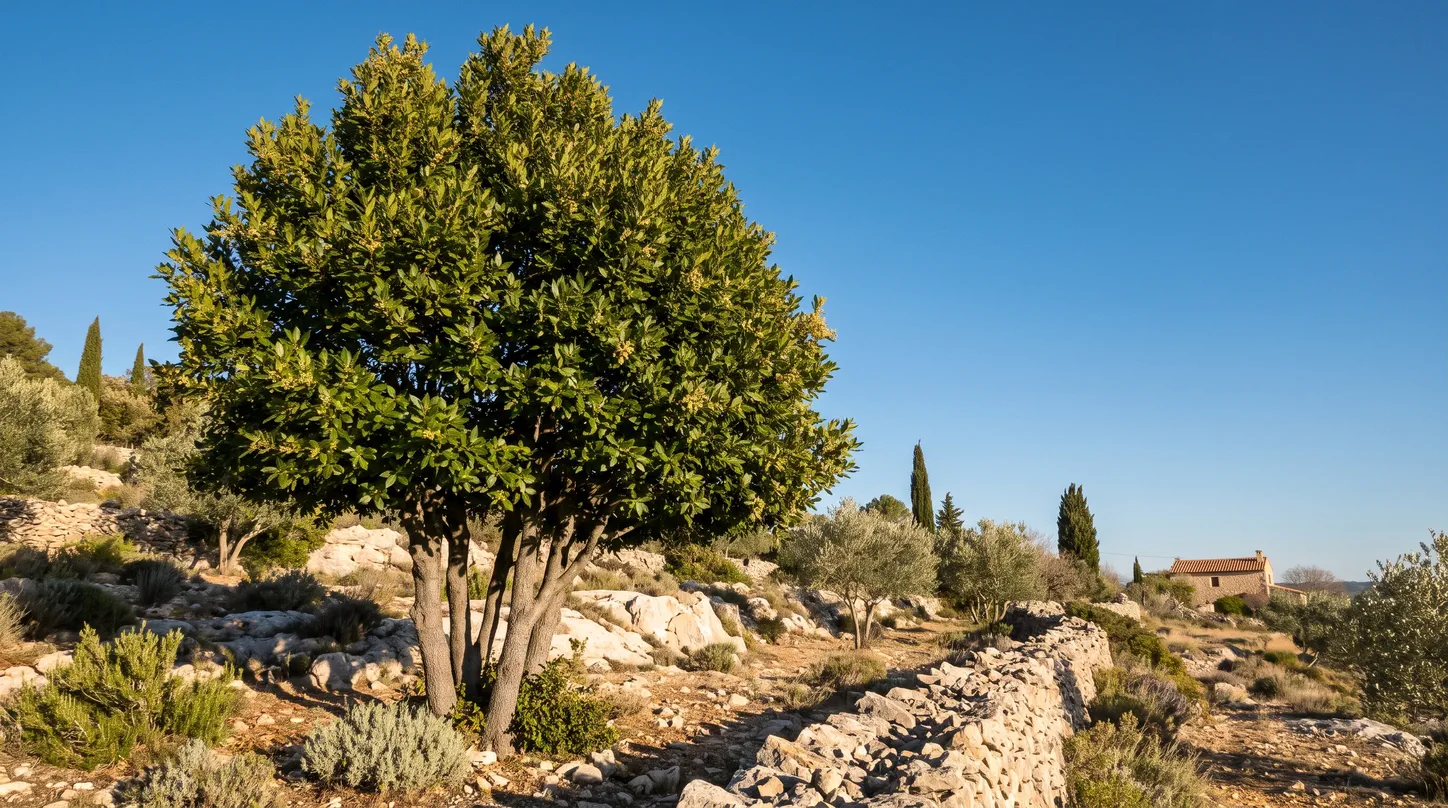
Bay trees (Laurus nobilis) are one of the most popular evergreens in British gardens, prized for their glossy, aromatic foliage, their structural presence, and their willingness to be clipped into neat balls, cones, or standards. They're also a kitchen staple—few herb gardens feel complete without one close enough to the back door for a quick leaf-pick on a Sunday afternoon.
This Gardenseeker guide walks through everything you need to know to prune bay trees with confidence: their growth habits, the best times of year to cut, the tools worth investing in, step-by-step techniques—including the Gardenseeker Two-Season Staged Pruning method—shaping advice for topiary and standards, and the aftercare that keeps a freshly pruned bay tree thriving. Whether you've inherited an overgrown specimen or you're training a young plant from scratch, you'll find a clear path forward here.